Friday, February 13, 2015

Australia: Sydney, NSW


Rainy day at Macquarie Point.

Australia is far, far away from anywhere I had ever been before.  Australia is really big.  Australia has summer in January.  Australia has stars I had never seen before, and trees and plants and animals I had never seen before, and birds I had never heard or seen before, and clean, white beaches.  Australia has a few spiders, but they kept to themselves while we were visiting.

Sydney is a clean, well-dressed city.  Sydney has a large number of people who go running during the hottest part of the day, on their lunch breaks.  Sydney has proteinacious brekkie spots (thanks in part to Sydney's blossoming hipster culture) where you can enjoy eggs on toast every morning, a giant, free botanical garden with plenty of shade, and a spacious reading room across the street, if you are the sort who goes on vacation and then spends half a day at the library.  Sydney has saltwater swimming pools with 50 meter lanes that cost about $5 to use.  Sydney is pretty expensive, although not like Norway-expensive.  In Sydney, it seems, one cannot buy a bad coffee (thanks in part to Sydney's blossoming hipster culture).

Pictures for you:

A Noisy Miner, mining for orange juice.

I could support a botanical garden with a sense of humor...

Sum kinda gum tree.  Iron bark?  Blackbutt?  That's a real name.

I don't know what it is, but I like it.

We saw Eddie Izzard, and he was predictably great.


That library I mentioned.

On the ferry to Manly.  Big ol' 3-meter swells where the harbor meets the ocean.

Classic walk from Bondi to Bronte beaches.

Work folk.

They were wide.

Bondi to Bronte, gettin' on toward sunset.
A photog, going for some fancy spray shots at Bronte.

Water dragon, different day, hiking around the harbor by the zoo.

More pictures for you!  All from the Sydney Royal Botanical Gardens this time, because I took many photos there.  NSFA (Not Suitable for Arachnophobics):


A netcasting spider, I think... among the waterlilies, anyway.

This is a St. Andrew's Cross spider... and they like the Gardens, too.

Same spider!  Might want to back up a few inches.

HRRAAAARRGGGGHHH!!  Just kidding, we're harmless garden spiders.

This was Twiggy.  I don't know Twiggy's real name, but it's getting dark, and I only Google spiders when it's not dark.

Yes, thankfully, we have.

At first, I thought it said "JYCVBXUYHW IXSFL"


All pollen, no spider.


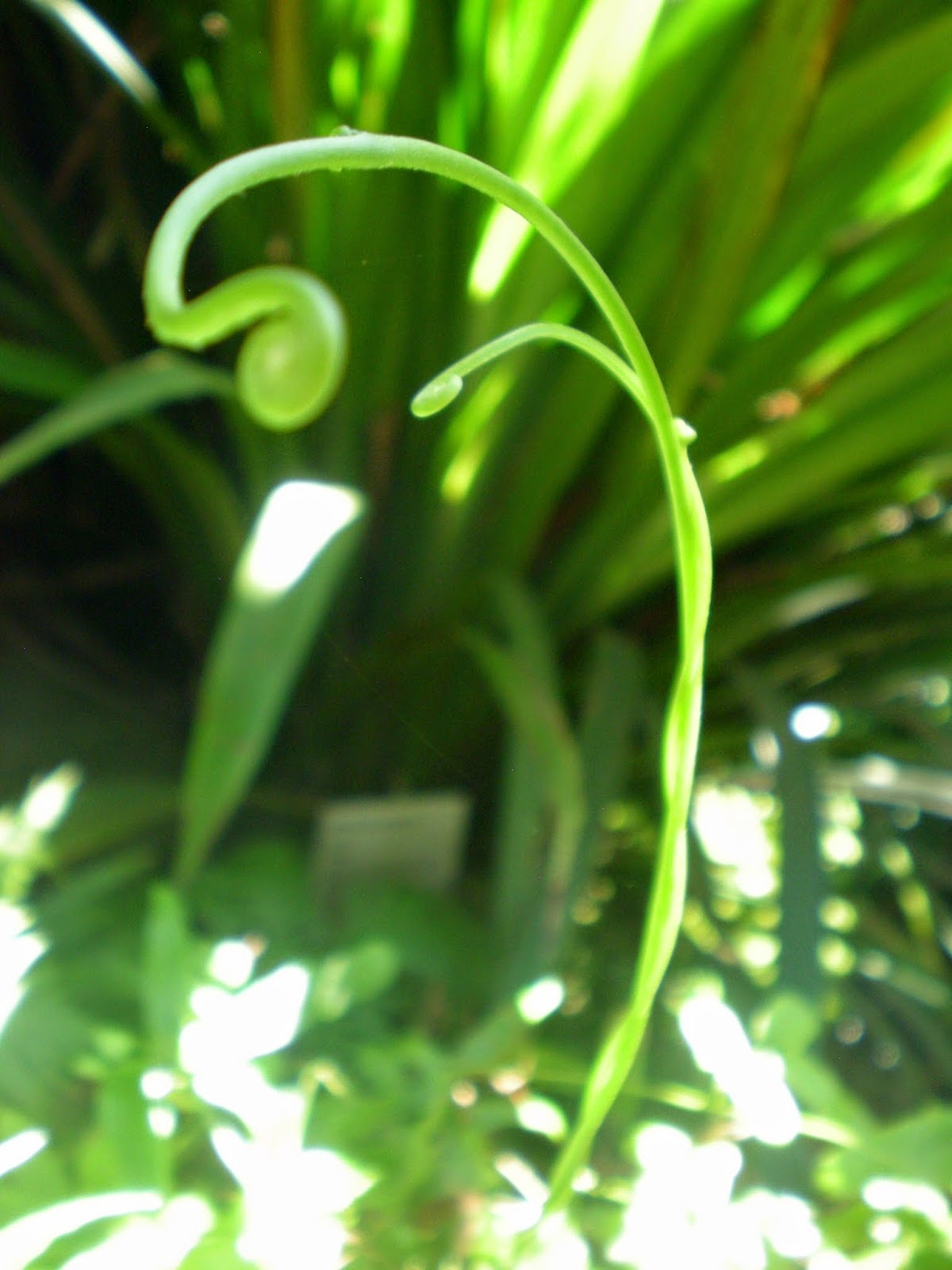
Giant fern fiddleheads.


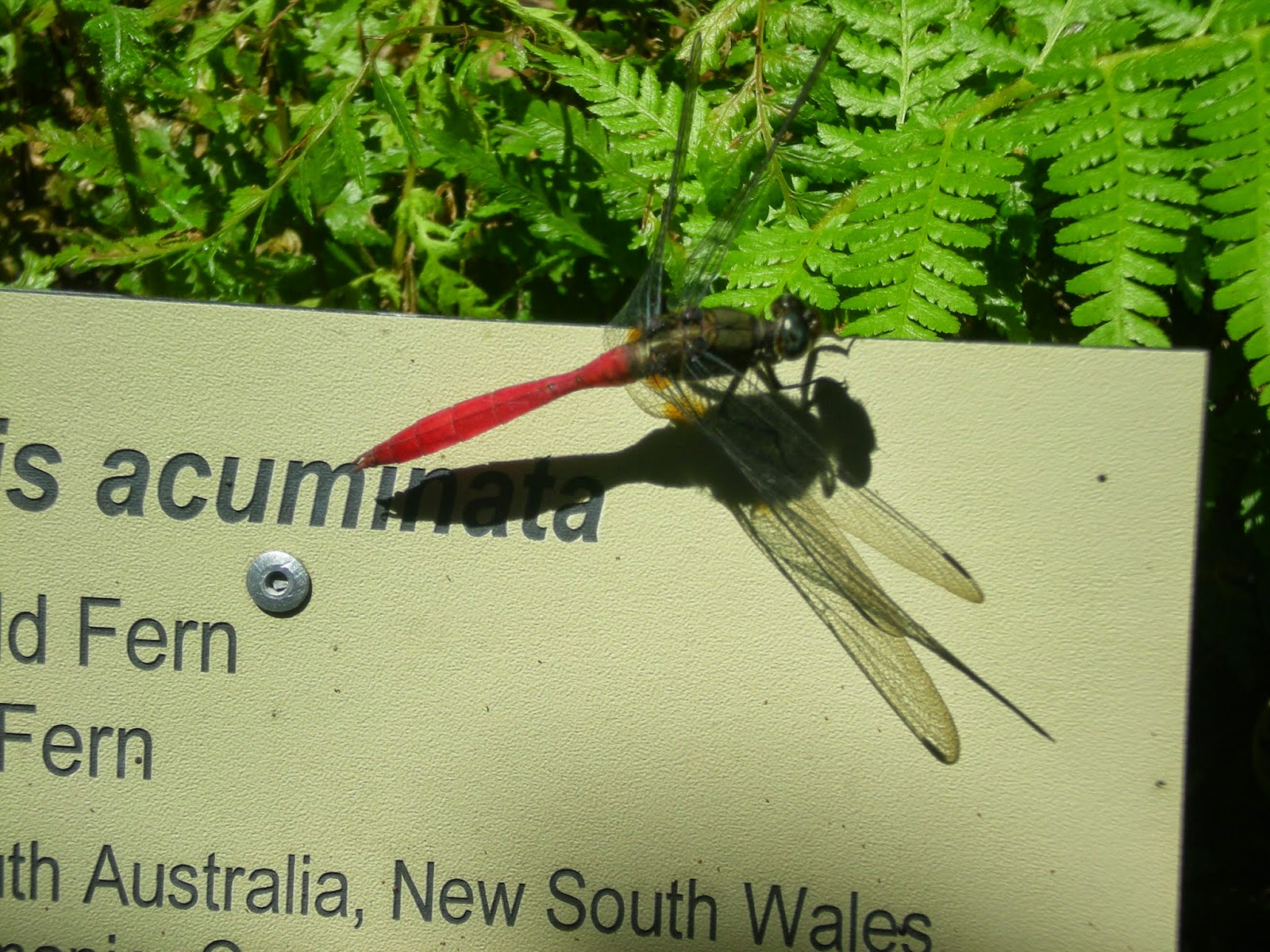
Highly informative!
And not so informative!

And what?


After a cricket match (AUS vs India!), a comedy show in front of the Opera House (Eddie Izzard!), rain and sun and lots of ginger beers and flat whites, we went camping among the kangas.  To be continued in Part Two of this segment.

Friday, January 16, 2015

Recap of a Race I'll Definitely, Probably, Maybe Never Run

The Egmond Halve Marathon is a Dutch classic.

It is not my cup of tea.

It starts with nearly 10km of beach running in the hard, canted sand along the North Sea.  It ends with a mile of Uphill Lite that the Dutch like to overdramatize and call the "Bloedweg" (Blood Road).  It's in the middle of Coastal Northern European January, which can (and usually does) mean the weather is "inclement."  When you call it "inclement," you will need to shout the word through your blue lips to make it audible over the howling wind.  This year, the final mile was also into a steady 35 mph headwind (with 45 mph gusts).  This is the type of wind that the Dutch like to underdramatize and call "a fresh breeze."

Despite often cold, windy, sandy, (kind of) hilly, cold, and windy conditions year after year, the darn thing just won't die.  It's been around for 40-odd years now, and would attract upwards of 17,700 participants, if the number wasn't capped at 17,500 the year after the number grew to 17,700.


This year, Ed and I attended, as spectators, in part to get a measure of the fuss.  We had two friends, several coworkers, and many Phanos faces running, and the weather was not too shabby by Egmond standards:  Only "severe" on the radar, no worse.  And it wasn't raining!


The course was diverted due to lack of shore, and start times were delayed 30 minutes.  That was good, because we were riding into the wind on our bikes from where we had stayed the night in Castricum, 6 km from the starting line.  Being so near to the race on Sunday morning meant that Ed and I could not look out our apartment window in Amsterdam and decide to spend the day on the couch watching Doctor Who.  We were committed to watching Joe and Mark and everyone else.


The wind was the sort you can recline onto without falling over.  It was the sort that will blow one leg into the other like a crafty junior high schooler in the hallway, making you trip on yourself.  It was the sort that Dutch people like to call "fris!"while leyezing (laughing through their eyes?) as they churn past you on their steel-framed omafietsen like you are standing still on your composite-frame hybrid, because you are.


There wasn't much of a "warm-up" to be had.  Most smart folks were tucked in the lee of a tall, broad apartment building adjacent to the start corrals.  That's where I was, anyway.  I finally left the shelter and endured a grueling fight through the elements, sweating and panting, high on endorphins.  Then I reached the pub two blocks away and drank coffee with Ed while we watched the race unfold on the six television screens lining the walls.


We left the pub and ran down to the dunes, where the runners would start the mile-long incline to the finish.  Into the wind.  Looked tough.

I'm no stranger to cold, windy, and wet, but for the last couple of years, I've been fortunate to have the option to live with the wind at my back.  It's pretty great: the warmth, the quiet, the lack of telephones ringing and knocking at the door and deadlines and staring at charts.  For ten years, I was deaf to most things that weren't pounding out various jobs, going to school, going to more school, more jobs, volunteer jobs, moving across the country, more jobs, and then moving across the ocean.  Settling here felt like hitting the turnaround, and the relative peace and ease has been, yeah, really nice.  Even when it's boring, it's nice.  I sit around a lot and write junk and think about working on my nursing license application.  I read.  For fun.  I volunteer, doing the things that I enjoy doing.  Sometimes I work.  Sometimes I clean the bathrooms and hang the clothes to dry.  Living "wind mee" is hardly any effort at all.

But... I sometimes feel a bit guilty, for being so lazy.


 And I sometimes miss the camaraderie of running into the wind with other people.  Metaphorically, working (regular, paid working, I mean).  Literally, 17,000 people, all  heading into the same wind for the final mile.  For most every runner out there, it was cold, and it was challenging, and it was probably painful.  When you are cold and fighting and in pain surrounded by thousands of other people also cold and fighting and in pain, that makes it less like dying and more like living.  It makes it, some say, fun.

Despite running on sand, in wind, with seafoam blowing off the whitecaps and hitting them in the face for half an hour, people still managed solid times.  We happily donated 1 km of "wind tegen" running and met our shivering friend Joe, who'd clocked under 1:55 for his first half.  We stood around waiting for others, being generally pleased.  We talked to our Running Holland coach friend, Frank, who said that the wind really hadn't been that bad at all.  Joe said the same.  Others agreed.

Ah, Egmond. All right.  Maybe I'll see you next year.  Can I put hot tea in a Gu belt?

Thursday, January 8, 2015

RetroPost: Bilbao (We Miss You)


I’m running again.  Not quickly, not without lungburn, not without shame at how slow I've become.  But it’s shoes on, wind in my hair, rain on my face, sweat on my forehead running. 

A certain something about running in the Amsterdam winter inspires me to think about summer.  I suspect it's that wet, dark, cold, windy certain something.  So I've been thinking a lot about the five days we spent in northern Spain last June.  There, in beautiful Bizkaia, otherwise spelled Viscaya, otherwise spelled Basque Country, the hills are sumptuously green, and there are hikers and runners and mountain bikers all over them.  There, the Virgin Mary herself awaits you at the top of every mountain (how does she do it?) with benevolent, open arms.  There, be pintxos and the Guggenheim and really good wine. These integral aspects of the outdoor experience are deplorably lacking from running stair repeats in the dark at NEMO.  At least in my experience.  

Ah.  Bilbao.


I snagged the trip to Bilbao as part of Is This For Real My Volunteer Job.  Back in 2013, when complete and total neglect of this blog was yet but a twinkle in my eye, I mentioned a trip to Newcastle and a certain EAP organization of track meet(ing)s.  One of my EAP-related responsibilities in 2014 was to observe and evaluate at least one of the meets in the circuit.  The official languages of EAP functions being Italian and French, I naturally gravitated to the Spanish-speakers in the group.  One of them spun seductive tales of running in the mountains around Bilbao, and I blindly raised my hand.  Vous allez Bilbao, said the EAP President.  Apporter une veste de pluie!  I thanked him for his kind words, and counted down the months until June.


Bilbao!  I'd been eyeing the north of Spain for years as a travel destination, and the circumstances could not be better.  Hills, trails, track and field, pintxos, and my travel costs would be reimbursed.  

Even better than going to Bilbao on someone else's euro was being able to go there with Ed, who had his bags packed at "mountains."  Our friend Mark was equally enthused.  Thus it was that the three of us took a KLM city hopper to Bilbao on a sunny Tuesday in mid-June.  

In the photos, you will notice that Mark is always wearing long sleeves.  This is because Mark is British and exposure to sunlight makes him fry like bacon in a hipster dive bar.  Two weeks prior to Bilbao, Mark went to Chicago and forgot to wear sunscreen.  The resulting pink glow prompted one barista in Bilbao to deliver Mark's coffee while softly observing, "You ahr REEELY burnt."


Mark may actually be shirtless in this photo.  Difficult to say.

My Bilbao EAP friend, Alfonso, was only too happy to slip away from the hectic preparations surrounding the weekend's athletics meeting.  He picked us up on Wednesday from our AirBnb near the train station in the family furgoneta (in American English, "90's soccer mom van"), and drove us about 45 minutes out of town.  After navigating an impass of sheep, we parked to the side of a steep, narrow road at the base of the highest point in the region.  After a couple of miles, the road became less paved and more pasture, and we entered the glory of Gorbeia.


Gorbeia is technically a massif, which means there are multiple peaks forming a sort of ring.  We were headed for the topmost point... via happenstance hiking and blind trust in our trail running guide.  We set off at a good clip.  Some hours later, after plunging after Alfonso into the underbrush while ignoring the concerned shouts of more conventional hikers, we broke onto a grassy, open meadow.  It was so green and soft, we had to run on it.  Joyful, uninhibited meadow cavorting also helped distract us from the stinging nettles we'd brushed in the forest.


Alfonso, turns out, is a little bit crazy.  I should have seen this coming, given his hobby of racing hundreds of kilometers through the rugged European wildernesses multiple times per year.  He told us at one point that he tries to get lost every time he's on Gorbeia.  Every once in a while, he'd remember that he wasn't alone, look back, and apologize for getting so far ahead of us.  "I'm so used to running alone!" he said at one point near the top. "I forget you are here!"   


Chasing Alfonso on the way up.

Chasing Alfonso on the way down (which, against all logic, seemed to be mostly up).

After those reassuring words, we put our full trust in our fleeting guide and prioritized keeping him in sight at all times, stopping less frequently for photos.  While on the move, the ground took our attention away from the scenery, but it was also pleasant to look at after months of bike lanes and sidewalk pavers.

Eventually, lungs aflame and our Achilles tendons stretched like saltwater taffy, a chorus of cowbells greeted us at the top of Gorbeia.  Our old friend Mary was up there, too.  I used to think it was a happy coincidence that the Holy Mother and I always seemed to be hiking the same Spanish peaks, but now I think it's just a Catholic thing.  She always looks so composed.  I bet she has wicked calf definition.


Speaking of calf definition.

Oh hey girrrl!

Then, we went down.  Which was not at all as routine as it sounds.  Alfonso took us on an alternate alternate route, which involved scrambling over sharp boulders in the woods for a few miles, eating canned pineapple rings like it was our last meal, and navigating more knife-edged rocks on the very rim of the massif.  Every time (twice) that Alfonso rolled an ankle and went down, we three sheep mentally calculated how long we could survive on fifty calories of pineapple rings and a handful of salted frutos secos. We needn't have worried.  He bounced up every time with the perseverance of a Punch and Judy puppet, and led us back to the car.  We were tired and hungry and dirty and happy.


I caught Alfonso!  I made him take a picture with me to prove it.

The northern edge of the massif.  From above, it looks like Jaws's teeth, if he'd had a severe overbite.

Meadow grass so soft, we could spread you on toast.

Do the cows have a secret portal to the summit?

Back in Bilbao, we showered and changed and found the nearest ice cream.  It was delicious.  Then we found dinner, and wine, and maybe more ice cream.  Then, we had a massif night's sleep.

Mark is probably wearing a shirt here.  Tough to judge.

There were other days that week!  We enjoyed all of them.  And, despite the warning from Monsieur President of the EAP, I did not need a rain jacket (at least not until Saturday).


Thursday at sea-level: Kite. Knots. Drunk, "helpful" fisherman.

A slightly less adventurous hike on Friday: Pagasarri. Formidably shadeless.

Saturday: "Work". For some more than others.

Bilbao, Bilbao.  You are mental fuel for these rainy running months... burn long, burn bright.  ¡Aúpa!

Thursday, April 17, 2014

Upper Intermediate Dutch User

On February 26th and 27th, a month shy of my 1.5-year anniversary of living in the Netherlands, I snuffled and sniffed my sick way through the four sections of the Staatsexamen NT2-II.  Then I distracted myself for the four weeks that my results were pending.


A number of questions I would like to address:

1. What, exactly, is the NT2-II?  Why did I take it?

NT2 stands for Nederlands als 2e taal, or Dutch as 2nd Language.  The exam judges how good or bad a non-Dutchie is at Writing, Speaking, Listening, and Reading in Dutch.  There are two options for taking the test: Program I or II.  I chose to take the more advanced test because I want to work at a level that reflects my university and graduate education, and passing the Program I test would only allow me to work at the level of someone with an MBO education, which roughly corresponds to a U.S. community college or technical college degree.  There's talk of introducing an NT2 III test option, but that level doesn't yet exist.

Someone who passes the NT2-II, in theory, can Write, Speak, Listen, and Read Dutch at the B2 level or higher.  A B2 command of a foreign language translates into someone being a “Vantage or Upper Intermediate User” of that language, by the European language framework.  A person with a B2 level of Dutch proficiency should be able to*:
  • Understand main ideas of complex text on both concrete and abstract topics, including discussions in my field of specialization. 
  • Interact with a degree of fluency and spontaneity that makes regular interaction with native speakers quite possible without strain for either party. 
  • Produce clear, detailed text on a wide range of subjects and explain a viewpoint on a topical issue giving the advantages and disadvantages of various options.
*  Consider this an average proficiency level.  There are many factors and specific situations that can negatively affect your Dutch proficiency, and these cause the embarrassing moments where you operate at an A1 level of Dutch and feel like a three-year-old.  Apparently, these situations are forgiven if, for two days in a row, you are capable of "faking it" long enough to take the NT2.  Factors that regularly inhibit B2 proficiency may include jet lag, sickness, fatigue, too little caffeine, going on vacation in a non-Dutch country for a week or longer, too much caffeine, introvertedness, having recently finished a taxing aerobic activity, too much beer, talking to an attractive or otherwise intimidating person, noisy places that make it difficult to follow the conversation, spacing out during long meetings, too little beer, and pretty much anything that might affect your ability to function in your own language. 


2.  How hard was the test?

That depends on what you consider "hard".  Taking a computer-based standardized test is something that plenty of people have trouble with.  I'm pretty familiar with them.  By now I know to monitor my time, answer all the questions, prepare with practice tests, and other tricks of the computer-based test trade.  I've taken a few standardized exams over the past five years, and have tutored people for English's version of the NT2.  Tests don't really bother me.

In terms of it being in Dutch, now, that was certainly trickier.  A couple of weeks earlier, I'd panicked and hired someone to help me do some vocabulary-and-grammar cramming.  I'm quick on the draw with a dictionary, of which we were allowed to use up to three during the Reading and Writing sections (Thank God).  Reading and Listening were multiple-choice exams, and I felt confident about passing them.  I was most concerned about what I call the "output" sections, Writing and Speaking, in which I had to construct my answers from scratch.


The best way for you to judge the difficulty level of the test is to go take a look/listen at a practice exam or two.  Non-Dutch speakers, it's the links found under "voorbeeldexamens", and to you, for obvious reasons, it will probably seem rather difficult.

I'd really like for some Dutch speakers and veteran expats to peek at some practice exams

“A guy at my school passed that test, and he can barely speak Dutch.  If he can pass it, you definitely can” is something I heard more than once from Dutch pals with good intentions of trying to motivate me.  Another was, "They probably don't grade too hard on the Speaking".  I appreciated their attempts, but their reassurance sounded glib.  I suspected they had never looked at an NT2 test themselves.  I wanted the speakers to acknowledge that the test was challenging, rather than belittling its difficulty.

For immediate gratification, though, here are a couple of more difficult examples from one practice exam.  First is a long writing exercise:

Here is an example of a Speaking exercise:
And here is one of my favorite short speaking exercises, which allowed 30 seconds to read the text, listen to a voice read the text, and look at the sequence of drawings.  In the next 30 seconds, you explained aloud to the computer what is going on in the pictures.

Nothing is more distressing than staring at these sketches and realizing that you don't know a key word like "shrug".  Despite my year of going through similar exercises In Real Life with physical therapy clients, I was totally baffled by the middle drawing.  Where, exactly, are those elbows going?


Surprise!  I passed.  Hardly with flying colors, but "good enough for the government".


I like to be a rarity, so I tried to find out how many people pass the exam and receive an NT2 "diploma" on the first try.  The College voor Examens 2013 annual report gave some clues, but I couldn't find any data on who passes and who doesn't, i.e. demographic data. 

There are a couple of roads to an NT2 diploma:
A) You can take all of the four sections over two consecutive days, and, if you pass them all, receive your diploma straightaway.  Or... 
B) Take the sections at your own pace, one-at-a-time over several days of your choosing, until you pass all of them.  Once you pass one section, you get a certificate for passing that section (Writing, for instance).  After passing all four sections, you can exchange your four certificates for an NT2 diploma.  There's no penalty for re-taking a section, but you do have to pay again each time, 40 per section.
The CvE annual report taught me that in 2013 there were 6,661 people who took the NT2-II and 10,118 who took the NT2-I.  Of those 16,779 total test-takers, 3,827 of them passed on the first attempt at all four tests and received their NT2 diploma directly.  The report didn't distinguish between people who passed the NT2-I versus the NT2-II, but it doesn't matter too much.  Even if all 3,827 were NT2-II test-takers (which we can assume they are not), that's still a maximum first-pass rate of 57%.

If we assume that, since 39.7% of the testers represented NT2-II testers, 39.7% of the diploma-winners were also NT2-II testers (again, not known information), that would suggest a mere 9% of people who took the NT2-II in 2013 successfully passed all four sections and gained a diploma on the first attempt.

Which makes me feel pretty cool.


It also makes me think about how many people will be returning to those stark grey cubicles, and how many times, on average, and over how many months (years?) it takes the majority of them to get that pesky NT2 certificate.

The total number of NT2 diplomas awarded in 2013 was 6,503.  The rest of the 10,000+ people who took the tests will have to take at least one of the four sections again... at least one time.  


What prevents people from achieving B2 proficiency?  How many masters-prepared healthcare professionals are there hanging out in the Netherlands and not yet working at the level of their education because they haven't gained that NT2 diploma?

When I walked into the exam center in February, I handed over a questionnaire I'd filled out, which asked questions about the length of time I'd spent living in the Netherlands, if I'd followed an NT2 study course, if my partner was Dutch, my household income level, and more.  I dearly wish I could see the data from those questionnaires for previous years.  However, as I haven't found that information free and online yet, I'll start by surmising, based on my personal experience, where the "Dutch is hard" myth comes from.  As part of that, I'll look at the enabling factors that made/makes it comparatively easy for me to learn the language.

On this, I've got pages and pages, most of which nobody will want to read.  I've been waiting until I'm qualified (read: passed the NT2) to write about it here.  I think that there are certain reproducible things that I experienced that made it possible for me to pass this, and I think that it's important to share them.

But for now, I've got some teammates to aanmoedigen.  

On a much nicer track... sorry, Colfax.